








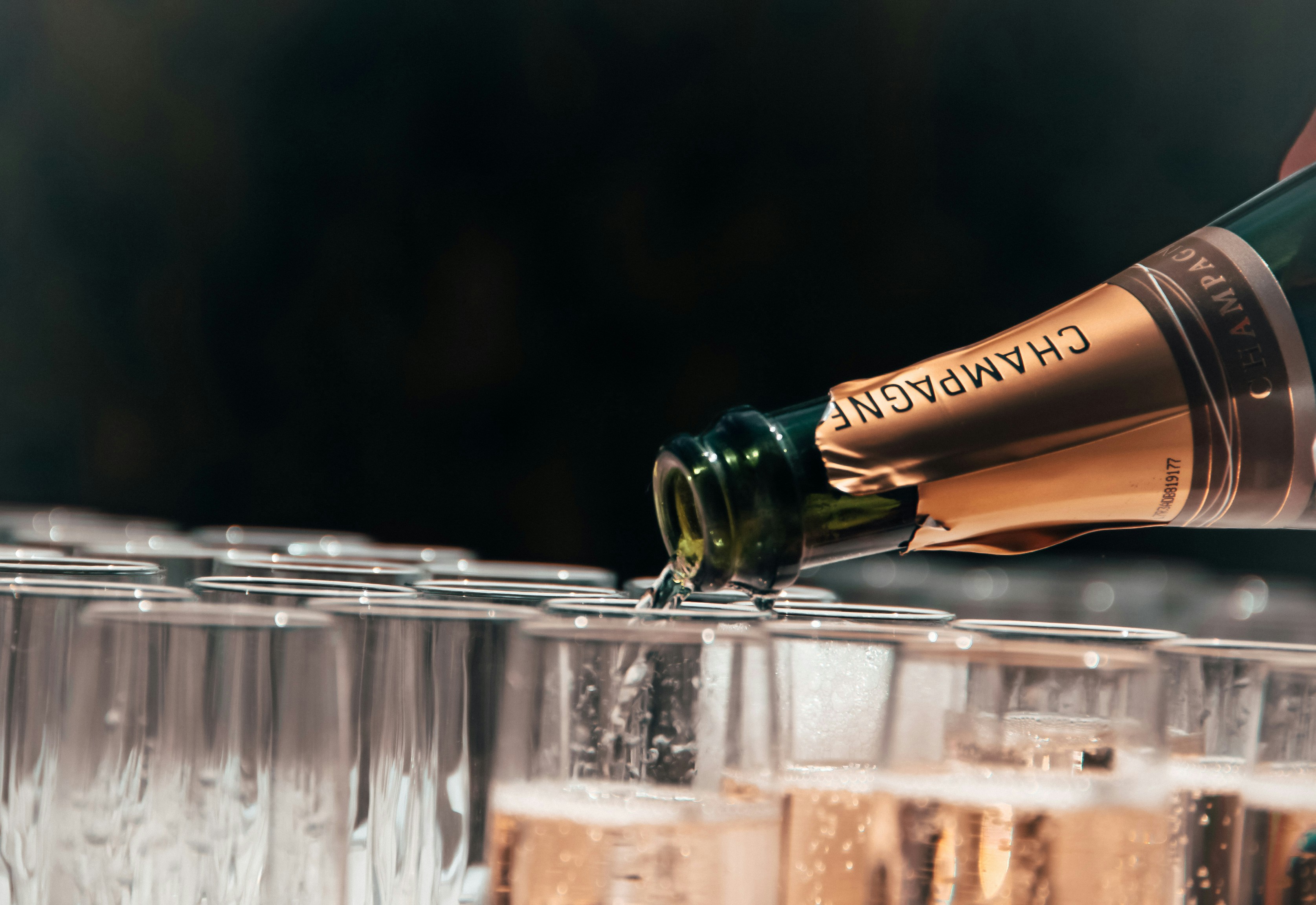

When you think of Champagne, what comes to mind? Celebrations? Special moments? The clinking of glasses at a wedding or ringing in the New Year? While Champagne is undoubtedly a drink of celebration, it’s also a beverage rich in history, tradition, and versatility that deserves a deeper appreciation.
From the method of its creation to the numerous varieties and styles, Champagne is more than just a sparkling wine—it’s an art form in a bottle. In this blog, we’ll explore the allure of Champagne, how it's made, its different styles, and why it’s so much more than a mere symbol of festivity.
A Toast to History: Champagne’s Journey Through Time
Champagne’s origins trace back centuries, with its first known production occurring in the Champagne region of France during the Roman Empire. However, it wasn't until the 17th century that it became the sparkling wine we know and love today. It is said that the natural effervescence in early Champagne was discovered by accident, when wine in bottles began to sparkle due to secondary fermentation.
The Benedictine monk Dom Pérignon, widely considered to be one of the founders of modern Champagne-making, refined the process and improved the quality of Champagne. The wine quickly became a symbol of luxury and indulgence, earning its place at royal courts and major events.
How Champagne is Made: The "Méthode Champenoise"
The production of Champagne is a meticulous and unique process. Unlike other wines, Champagne undergoes a double fermentation. The first fermentation produces the base wine, which is then bottled and sealed for a second fermentation. This second fermentation, which occurs inside the bottle, is what creates Champagne’s signature bubbles.
Known as the “Méthode Champenoise,” the process involves adding sugar and yeast to the base wine, which triggers fermentation. As yeast consumes the sugar, carbon dioxide is released, resulting in the effervescent bubbles that are the hallmark of Champagne.
The process is labor-intensive and time-consuming, which is part of why Champagne is so special. It can take several years for a bottle to reach its peak quality, with some top-tier bottles aging for over a decade.
Different Styles of Champagne: Find Your Perfect Bottle
Not all Champagnes are created equal, and there’s a style for every palate. Here are the main categories of Champagne you’ll encounter:
- Non-Vintage Champagne: Made from a blend of wines from multiple years, non-vintage Champagne is the most common and offers consistent quality year after year. It’s perfect for those who want a reliable, balanced taste.
- Vintage Champagne: Produced from the grapes of a single exceptional year, vintage Champagne is more complex and offers a unique taste profile that reflects the conditions of that particular harvest.
- Blanc de Blancs: Made exclusively from Chardonnay grapes, Blanc de Blancs is known for its light, fresh, and citrusy flavors. It’s often enjoyed as an aperitif.
- Blanc de Noirs: A Champagne made from black grapes such as Pinot Noir and Pinot Meunier, Blanc de Noirs offers richer, fruit-forward flavors.
- Rosé Champagne: A blend of red and white grapes, Rosé Champagne has a distinct pink hue and a fruity, berry-like flavor that makes it perfect for casual celebrations or pairing with lighter dishes.
- Prestige Cuvée: The top-of-the-line Champagne produced by a house, usually made from the best grapes and with extended aging. Prestige Cuvée is often regarded as the epitome of Champagne luxury.
The Best Pairings: What to Enjoy with Your Champagne
Champagne isn’t just for toasts—it’s a versatile beverage that pairs beautifully with a wide range of foods. Here are a few ideas to elevate your Champagne experience:
- Seafood: Champagne’s acidity and bubbles pair perfectly with delicate seafood dishes, such as oysters, shrimp, or lobster.
- Cheese: Soft cheeses like Brie, goat cheese, and Camembert make for a decadent pairing with Champagne’s effervescence.
- Fried Foods: The crispness of Champagne cuts through the richness of fried foods, making it a great match for items like fried chicken or tempura.
- Sushi: The clean, refreshing taste of Champagne complements the delicate flavors of sushi, making it an ideal pairing for a sushi night.
- Desserts: Champagne’s subtle sweetness (especially in Demi-Sec varieties) works beautifully with fruity desserts like tarts, berries, or even chocolate.


 Home
Home
 Categories
Thanks for sharing!